Showing posts with label South America. Show all posts

Tuesday, July 18, 2006

Faena Hotel + Universe


I cannot seem to take my eyes off the stark white and red colors of this ultra-chic designer hotel. The look is so crisp and vibrant; modern yet classic. Faena Hotel and Universe is situated in one of my favorite cities, Buenos Aires. Designers Faena and Philippe Starck create drama out of the crumbling turn-of-the-century El Porteño building on the Puerto Madero docklands, turning it into a 'temple to pleasure'.

The sophisticated interiors are inspired by early 20th-century transatlantic liners, with a mix of Starck's new designs and antiques picked up at local markets and auctions. The rooms all have views of either the docks or the river. There's a bistro, a cabaret, a spectacular outdoor pool and a gym/spa/hamam with genuine Turkish baths. Priced from $300, the decor itself seems worth every cent.

Sunday, April 17, 2005

Adventures in The Amazon: Day Three


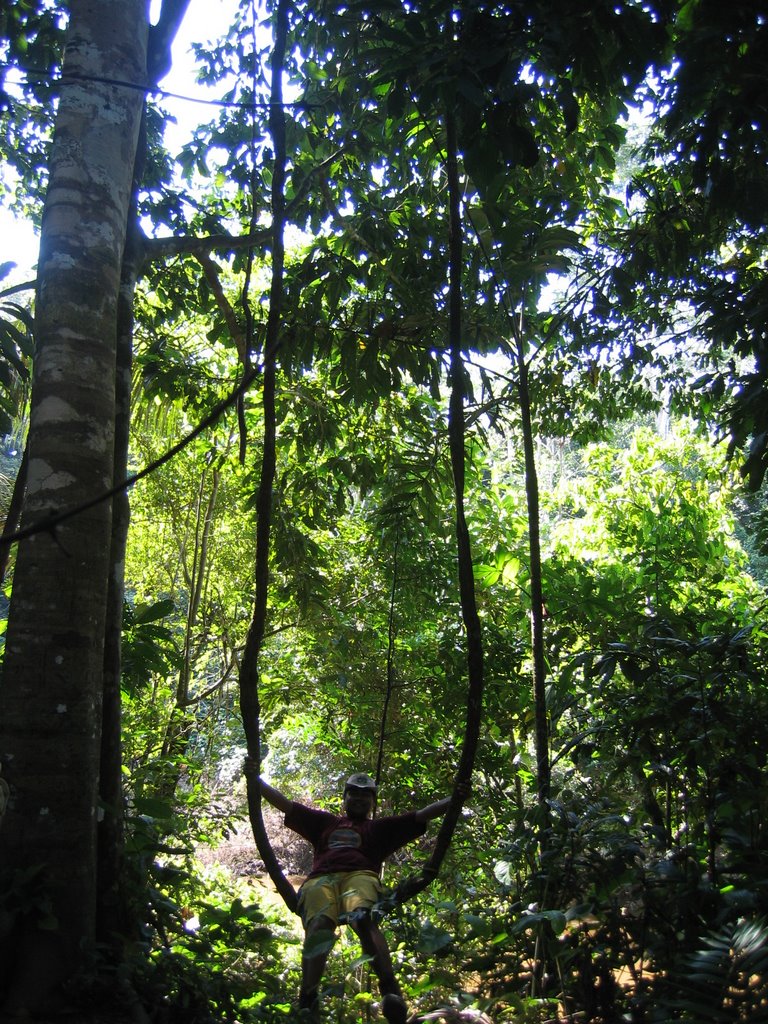
By this time Percy’s commands had become second nature to us, although the Norwegians confessed that they were having a tough time taking orders. The next morning was ripe with ebullient sunshine. We were only too happy to hide away in the forest. Nagesh found a swing in the jungle, a la Tarzan, while Elmer shimmied up a tree to retrieve a green fruit. He then dipped a toothpick into the juices of the "tattoo" fruit before practicing his art on our hands. We looked on incredulously as he etched invisible shapes from the colorless liquid. But exactly as promised, a snake and a flower came alive on each of our hands, taking on jet-black outlines within an hour. Our tattoos lasted ten days.

Fishing was foremost on our agenda this morning. We rowed up the muddy waters of the shallow Gamitana river and anchored the boat under a shady tree. On a nearby boat, a father and daughter team was fishing and washing clothes. Their son, barely seven or eight years old, was standing ashore and expertly throwing in his fishing line. He’d already caught his lunch.

Elmer prepared our fishing rods; pieces of meat tied to hooks fastened to the ends of long wooden sticks. We all threw in our lines and waited in somnolent silence for a tug. Just as we were dozing off on the edge of our boat, Elmer caused a stir. We all stood up in excitement as he pulled up a big catfish struggling helplessly at the end of his line.


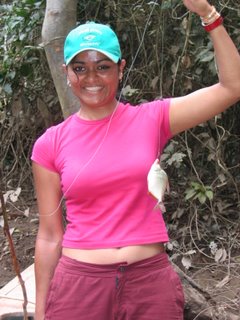
Inspired by his success, Kavita threw in her line in the same direction. She could feel some tugs but nothing each time she pulled up her line. Extreme patience in mind-dulling heat was about to pay off a few minutes later when she heaved out her line showing off a perfect little silver fish. Crazy with excitement, she began jumping up and down, rocking the boat wildly and destroying anyone else's chances of ever landing a catch. Meanwhile Nagesh, who was more concerned about losing the fish, rapidly goaded her to bring the catch into the boat. The ecstatic beginner first posed with her prize before handing it over to Elmer for cleaning.

Percy conducted our last activity that evening walking us around a medicinal garden in the lodge. The plants and shrubs grown here can cure anything from snakebites to altitude sickness.

Our fantastic hosts : Percy the manager and Elmer our ranger.

Wednesday, April 13, 2005

Machu Picchu: The Lost City of the Incas

We heave ourselves over the last few steps on the Inca trail. They’re no less exhausting than the countless ones we’ve scaled but this time things are different. We’re almost at Intipunku, the sun gate that promises us the first view of Machu Picchu (or old moutain). As we applaud each other for making it to the summit, our glee turns to disappointment. Machu Picchu lies hidden behind a thick low-lying cloud cover. We wait for a while before continuing on the trail, supposedly veering towards the fabled city. And then, by what Nagesh claims to be the power of a promised sacrifice to the Inca gods (let's not ask what he promised in sacrifice), the clouds turn to ether. A most dramatic clearing act uncovers the secret city of the Incas. Machu Picchu quite simply leaves us spellbound!

The hike up the inca trail is worth every step in gold. Although the sheer beauty of the Urubamba valley more than makes up for the near-death exhaustion at some points, the crown prize just obliterates all previous pains and pleasures. This must also be the reason why we decided to scale Huayna Picchu (or new mountain) and it's near vertical steps after all this hiking. Spurred by the promise of a greater view of Machu Picchu, the steep climb up the slippery steps of this sheer cliff was rewarded by absolutely breathtaking views. Albeit our knees did not share in the excitement one bit.

The Incas built Machu Picchu to protect themselves from Spanish invaders. This inaccessible site is nestled between tall lush green mountains in a valley pierced by the Urubamba river. Because its layout seeks to maximize the sun’s energy, Machu Picchu is squarely situated between the arcs of the winter and summer solstice points of the sun. This ensures that the sun shines all day on all the buildings in the city.

Despite it’s architectural brilliance, the Incas were wiped out, perhaps due to the very isolation that protected them from their invaders. The lost city was not unearthed until the early 20th century when Hiram Bingham found it buried under a forest. According to our tour guide, he was a "thief" who transported all his Inca finds (including some 106 mummies) outside Peru. Thief or not, he did uncover one of the greatest historical wonders of all time.

What happened to the Incas? How were they wiped out? How did they build this city? What was life like in Machu Picchu? There are as many theories on all these natural questions as the number of guides offering interpretations. And the answers are as varied and confusing as the countless labrynths inside the surviving walls. There are just no clear or definitive answers. As Nagesh says, this is where the Egyptians prove to be a far superior race that documented every detail of their lives through hieroglyphics.

And that is why it becomes important that we document our travels through this blog so posterity will never have a doubt about our trip to Machu Picchu in early April of the year 2005.

Friday, April 08, 2005

The Trans American Bus Journey

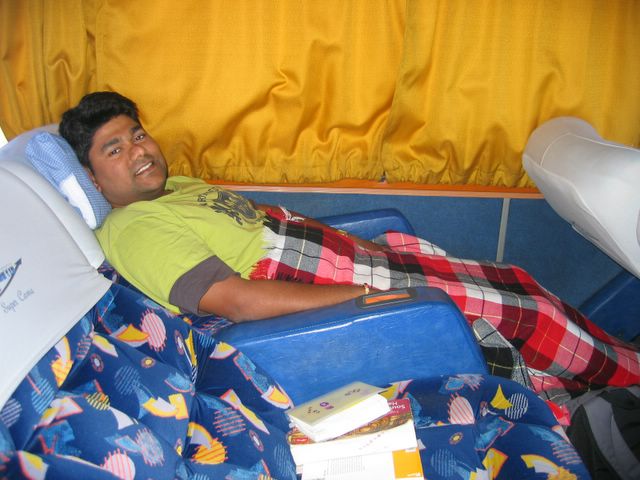
Beware of what you ask for in life…’cause you never know. Kavita wished for quality time with Nagesh tied to a chair and she got one better, chairs that recline!!!!!!!!!!


Posted by Hello
We'd undertaken twenty-two hour bus journeys earlier in the trip but this time we were working on a ride of a lifetime. Dollares more than any craving for adventure landed us at the ticket counter of in Rio’s Rodoviaria (central bus station). Dos boletos por favor. From Rio de Janeiro, Brazil to Santiago, Chile. Yes, we were taking a sixty-hour bus journey from the Atlantic coast to the Pacific cutting across South America with only 20 dollars in our pockets.


Posted by Hello
The journey was truly memorable, passing through distinct landscapes, from the Equatorial belt to the dramatic Andes. The climax was riding across Aconcagua, the highest peak in the Americas, while crossing into Chile via the Libertadores Pass and its 59 hairpin bends carved into the Andes.


Posted by Hello
Getting our passports stamped through the borders as we exited one country and entered another was adventure in itself. Especially when the couple seated behind us on the bus was arrested at the Chilean border for carrying contraband goods. We sat still as statues while police dogs sniffed out the entire bus in the aftermath of the discovery; praying all the while that the canines wouldn’t jump at our throats by mistake. We found our voices promptly after they left to indulge in horrified gossip with fellow travelers about the fate of the unfortunate couple.

Statutory Warning: This journey must be undertaken once, but only once, in a lifetime. And only if you possess an iPod, an iron butt, and infinite love for the person sitting next to you.

Thursday, April 07, 2005

Puerto Montt and Chiloe, Chile

Pablo Neruda calls Chile the country of longitudinal essences. The country is a thin sliver of land with the starkest topographical contrasts imaginable. The lunar landscapes of the Atacama desert in the north challenge the lush exuberance of Patagonia in the south. The wild waves of the Pacific ocean on the west bow to the imposing Andean cordilleras in the east.

The coastline south of Puerto Montt disintegrates into a 1000km dramatic chaos of fjords, glaciers, lakes, and forests. To make our way north, our choice was to either take the four day ferry ride from Puerto Natales weaving through this chaos or to take the dubious unpaved road known as the Carreterra Austral. We chose to simply fly over the mess into Puerto Montt, the gateway to the Lake District.

There´s really not much to write about this grimy town. It was a disappointment after Patagonia. The only amusing anecdote that comes to mind is from a restaurant when Kavita enquired about the types of pizzas they served. In response, the waitress produced actual frozen pizza boxes for us to read the ingredients. We decided not to order pizza.


Posted by Hello
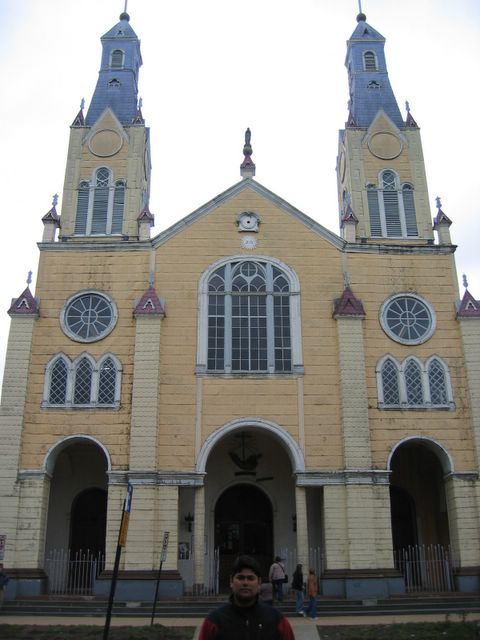
The next day we took a trip to the fabled island of Chiloe, known for its wooden churches, lush forests, legends, and proud Spanish history. This is where the Spanish conquistadores, the last supporters of the Spanish crown, took refuge from the Mapuche Indians and the rebellious Chileans in the mainland. The island surrendered in 1826 but still holds on firmly to its culture. They have resisted the building of any connecting bridges from Puerto Montt. So we crossed the distance on a ferry along waters teeming with dolphins.

On the morning of our trip the agent tried to coax us to take a different, more expensive tour for the same price. We discovered why later when he tried to squish a million people into a sad little matador van. To make things worse, the driver insisted on playing the most annoying folk music from Chiloe throughout the day. Packed like sardines we went from one wooden church to another, stopped at a feria artesanal (local craft markets), and various miradores (panoramic view points). The story behind the wooden churches is that the island was too isolated to receive other building materials. Some churches use no nails only wooden pegs in their construction.


Posted by Hello
Our last stop was the famous Palafitos or the houses on stillts (seen in the photo) built as such to protect the edifices from water. Characteristic thick rains washed out the rest of our drive back home. Before we end, we insist that you stop by some time to see the ¨handicraft item¨ we bought from this island. Let´s just say it rises to the ocassion.

Wednesday, March 23, 2005

Day II & III: Torres Del Paine National Park

No the weather did not cooperate next morning. Those who had made loud promises the previous night were found lounging around in the dining hall next morning. No one had gone anywhere. The rain was invincible. It was time for us to move on. We had reservations at the next refugio which was a good six hour hike. No sight of the Torres for us this morning either.

The hike started out wet but thankfully downhill this time. There were no trail markings and we had to pretty much tread along the path most travelled. This worked fine until we hit the first of several streams or mini rivers that we had to cross with great caution. The trails seemed to disappear completely around these streams and we even went off track a couple of times. We were hiking in complete wilderness with no one in sight for a few hours. It was magical.

The rains had cleared quite a bit by now and the sun started to tease us. The vegetation was glowing green and the streams were gushing. We were soon rewarded with the view of lake Nordenskjold (we still haven´t figured out how to pronounce this, so don´t stress). The rest of our hike hemmed around the blue waters of this lake backed by tall peaks playing hide and seek behind the clouds.

Five hours and a picnic lunch later, we caught the first glimpse of the Cuernos (horns). The peaks were still shielded by the clouds but there was a promise in the air. The refugio Los Cuernos was situated at the foot of the cuernos and the banks of the lake Nordenskjold.

We spent the rest of the evening walking by the lake and waiting for the grand unveiling of the Cuernos. On a side note, taking our own food to the park was well worth the effort. Fellow travellers were complaining about the high prices and inadequate quantities of food rationed out to them.

We woke up at the crack of dawn next morning to catch the virgin rays of the sun on the Cuernos. Our hike was six hours long this morning and we had to make it to the ferry docks by afternoon. The hike started off along the rocky shores of the lake and meandered into the thick lenga forests. This was a mean hike for this early in the morning. As the day progressed we got spectacular views of the peaks and glaciers around us.

Six hours later just as you would think the panorama could not get better, we were astounded by the emerald green waters of Lake Pehoe. It seemed like a canvas - so unreal. We caught a ferry from the docks here across to the transfer point where the buses would pick us up.

The ferry ride was the icing on the cake. The peaks, waters, glaciers, all of nature in its glory against clear blue skies. This was the reason we were here. How could we say goodbye without a glimpse of the Torres? They peeked out to say hasta luego as we turned back to catch a last view of the park from the bus.

Saturday, March 19, 2005

Torres del Paine National Park, Chile

Known as the mecca for trekkers, Torres is the crown jewel of our trip. This park is worth its distance in gold.

Located in the heart of Chilean Patagonia, access to this park is extremely limited. A three hour bumpy bus ride later, we were greeted by herds of Guanacos at the park entrance. After paying the hefty entrance fees, we were dropped off at the transfer point from where a shuttle would ferry us to the Las Torres base camp.

Because the park was still partially closed due to the fires, the shuttles were taking an alternate route. Trekkers in Torres can choose to do a shorter four day ¨W´´ or a longer seven day Circuit hike (connecting the two ends of the ¨W´´ in a loop). When in America, we aimed for the Circuit. By the time we made it to the park, it was no longer an option. And we ended up doing an even shorter version of the ¨W´´. The last portion of the ¨W´´ is a hike that takes you up to Glacier Grey. Since we´d already dabbled in our share of glaciers, we decided to focus on the Torres (towers) and Cuernos (horns) of Paine. Our three days were split across the two refugios that provided closest access to both of these.

The park bus transfer point started filling up with backpackers from around the world. We were guaging and comparing the weights of all backpacks and assessing each one´s contents during the wait. The lighter ones were surely not carrying food. And just how were those people planning to carry tents, utensils, and all that load? There were all sorts of people with all kinds of luggage. The park bus came around with a special baggage carrier in tow. All the backpacks were stowed away and more money was collected from those who had no reservations at the refugios. The only negative about this park is how much they charge at the pretext of remoteness. We forgot about all this money business as soon as we caught our first glimpse of the Torres. Only partially though. The sky looked cloudy with only some parts of the towers in view. Imposing masses of three gigantic rocks presiding over the landscape. Very rugged and unforgiving. This was nature´s own sculpture in the middle of nowhere.

We were about to climb up and get a full view. Our first day´s itininerary involved a relentless upward climb for 6 hours. Refugio Chileno was four hours away from Torres base camp where the park shuttle deposited us with our backpacks. Right before we started the hike at 10am, we ran into an Irish couple who had boarded in the same b&b in Ushuaia. They were just finishing their five day stint and looked exhausted beyond words. They´d been camping all along and had become worshippers of the park. We waved them goodbye, strapped on the bags, and got on our way.

It was a gorgeous balmy day with light sun and winds. Only the caprices of the weather in Torres are worse than Donald Trump´s boardroom gimmicks. Not that we were unprepared, having heard all sorts of horror stories. It wasn´t looking bad at all except that the wind was against us. As usual there were no marked trails or signs anywhere.

Two hours into the hike and the weather Gods started sprinkling us with a light drizzle. Nagesh was wearing his parka but Kavita didn´t really care to stop and fish hers out. Ten minutes later, we were stopped on the side drenched from head to toe struggling to pull out our parkas and ponchos. The winds were lashing against us mercilessly. All the elements were in their ugliest moods and this was just the beginning. Layered up with ponchos that covered our backpacks, we abandoned all hopes of a picnic lunch in the picturesque settings. All we could see through the rain curtain was a grey cover. The hike was getting steeper and the trails we regurgitating slush. We started singing Om Jai Jagdish Hare at the top of our lungs followed by Hum Honge Kamiyab (we shall be successful one day). The Gods heard us alright! We could finally see the refugio at a distance. A log cabin nestled between a valley on the banks of a gushing river - but we were too tired to appreciate any of that.

We stumbled wet and cold into a refugio packed like sardines. Shoes and backpacks had to be left on the patio where there was no place to even stand. The main doors opened into a sitting area with long wooden tables and chairs. Not one chair to be found. We checked in and were shown to our dorm room with eight bunk beds. Kavita refused to sleep on anything higher than the first bunk bed.

We took off our wet jackets and headed to the lunch room. Food never tasted better and the warmth was so welcome. People were huddled around the wood burning furnaces. The smell of damp clothes and socks hung thick in the air and the furnaces were being used to dry everything.

We just sat there and waited for the rains to abate to make our way up to the towers. It wasn´t meant to be. The rains kept coming down harder and harder. A few brave souls decided to charge ahead only to return disappointed. The towers had gone into hiding with rain turning to snow at the heights.

We were jinxed but strangely not upset. It was like a bonus day to relax at this cozy lodge and write our blog. In a few hours we knew everyone in the refugio including the campers sheltered in there. Nagesh and I spent hours commenting on everyone. During dinner, we met Guido, our dutch friend who offered us a game of dice for dessert. Soon we had gathered an eclectic mix of campers at our table shouting over the exciting rounds of The Mexican. We hadn´t realized how many games could be invented with a bunch of dice and they´re so portable.

People shouted promises to wake up at 3am and head up for a sunrise view. Nagesh and I shook our heads and decided to take things as they come. We were having a great time as it was. Quiet hours commenced at10pm and we cuddled happily into our sleeping bags. Except, somewhere in the middle of the night Nagesh´s bed turned out broken and he snuggled in with Kavita. Howz that for an excuse!

Tuesday, March 15, 2005

Dulce de Leche and Superclasico

Dulce de Leche is a milk-based caramel also known as manjar blanco. A blancmange that can last several months when stored in cool shadows of a cellar or the refrigerator for the non-romantics. In the days of yore, a fire of kindling and charcoal was built in the patio. A tripod was set over it that supported an iron kettle. Four cups of milk to one cup of sugar was flavored with two vanilla beans and the peel of a lemon. This mixture was then boiled and stirred for hours after which the sweet or dulce was cooled and stored. Now try this recipe and tell us what it translates into ,-)

Oh boy! All the research you make us do with such slow internet connections. The superclasico is between Boca Juniors and River Plate. Btw, we saw River Plate in action on tv last night. Rival fans call the River Plate gallinas or hens or chicken and the Bocas are lovingly called bosteros or horse-shitters.

None of this is an attempt to prove that we´re not shacked up in a motel in Bakersfield, Ca. But you gotta give us some credit for the superfine photoshop jobs and the imaginative tale spinning :-)

Saturday, March 12, 2005

Day 2: Los Glaciares National Park, El Chalten

We unzipped our tents at 6am next morning to the sight of amber peaks blushing under the first rays of the sun. Guess who was doing the rounds waking people up? Mariano you bet! We dragged ourselves to the wooden box first and then to the breakfast tent.

The agenda this morning included crossing a river on a rope harness, a trek across the glacier, and attempting to climb an ice wall. Trekking on the glacier requires clampons, special spiky shoes that are tied to your hiking boots. Mariano had custom fitted clampons for each of us that we had to carry this morning. After breakfast, the guides fitted us with harnesses for the river crossing and ice climbing. There was an eerie feeling when we tightened the harnesses around our waist. We had never previously attempted any of these activities.

Before leaving the camp, the cooks handed out lunch packets. Since we were returning to camp after the glacier trek, we decided not to carry any extra stuff with us, including lunch. A mistake we would dearly regret. We set off with backpacks weighed down by the heavy iron clampons, water, gloves, and warm clothes.

The hike to the glacier was an relentless three hour climb punctuated with the most gorgeous vistas. Mariana and Pepe were barely giving us any time to soak in views of the sparkling glacier and the surrounding peaks silhoutted against the spotless blue skies. We marched onward on a thin ridge until we hit the river crossing. Gulp! Kavita was openly nervous while Nagesh seemed very excited about this stunt. A rope is tied across the river and they attach you to it at the waist. Then swinging from the rope, you pull yourself to the other shore using your arms and the pulley. Kavita thought the first girl to volunteer and scurry across on the rope was mighty brave. Soon, Mariano was strapping Kavita on and she rolled along with the alacrity of a pro, shouting from the other end that it had seemed tougher than it really was. Nagesh went next, trying not to look down at the river gushing below. It was very exhilarating.

After a very arduous hike through huge rocks we got to the mouth of the glacier. It seemed completely unreal. We were standing on ice with crystal fields stretching all around us. The initial part of the glacier was black. We could´ve been walking on another planet, the moon, anywhere but on this earth. Clampon time!

Mariana and Pepe made sure our new shoes were properly tied on. We felt like titans from The Terminator - an army on the move. Clampons make the feet so heavy and you have to keep your feet far apart to prevent from tripping over yourself. Not a risk worth taking, unless you want to explore those deep glacial crevices. The ice cracked under our feet like glass but soon we were confidently trekking on ice. But wait a minute. The confidence melted away into a puddle of mortal fear when we were required to jump across a huge crevice to the other side. Two guides on each end held on to our hands and harnesses. There was no time to procrastinate. They would just yell jump and push you across before you knew what was happening.

Every shade of blue is reflected in the nooks and cranies of the glacier. The penetrating rays of the sun bring out unreal tones. Aaah!!! Ever tried a refreshing swig of water fresh from a melting glacier? Pure pure water, but, as Pepe was quick to point out, totally devoid of any minerals. After an hour on the glacier we faced our last challenge: a 60 foot ice wall. Time for the lunch that we´d conveniently left at the camp. We were famished and it didn´t help to watch others gulping down their sandwiches.

Nagesh was the first volunteer to climb the wall. Bravo! Kavita was so proud of him. First Mariano gave us some pointers on the technical climb using ice picks and clampons. The key is to use one limb at a time and get a good foothold before hoisting yourself up. And this one is way tougher than it looks. Up went Nagesh without a glitch, straight to the top of the wall as everyone around cheered on. Kavita had knots in her tummy... did she have to do this? The girls that went up next just could not get a firm foothold and were struggling to stay on. One guy´s shoes came off midway and another was hanging with one arm. None of this was boosting Kavita´s courage. All except Nagesh and Pepe who played cheerleaders. Kavita went up one step at a time, without any disastrous moments. It felt like such an accomplishment! Now we know Spiderman´s job ain´t easy.

We started at 8am and our strenuous day ended at 6pm. More than 8 hours of intense activities later - did we mention that we hiked with full backpacks - we were beat and lacking the energy even to walk to our bus station. A 5 hour long bumpy ride awaited us before we could hit the hot shower and the sack. To add to our misery, we must tell you that there are huge signs all over the bus forbidding you from taking your shoes off. Since we weren´t carrying flip-flops, we had to squirm in our sweaty socks the rest of the way home.

Los Glaciares National Park, El Chalten, Argentina

A taxi picked us up at the crack of dawn to ferry us to the bus station. A five hour dusty ride through the Argentine steppes was broken by a brief stop for breakfast. We mention this stop to pay tribute to our first Guanaco sighting - adorable creatures that look like a cross between camels and llamas. The poor guy was tied outside the Hosteria, offering kodak moments to visitors. We waited on the sidelines for the fellow to have a cross moment with one of the pesky tourists and were nearly rewarded when a zealous old lady went overboard with the petting routine.

Confusion awaited us at the national park. At the visitor center, tourists from different buses were hustled into separate rooms for Spanish and English speakers. After a brief overview of the park and trails, we were left in the lurch wondering how our tour would kick off. The bus took us to our next stop where we were relieved to see a long-haired guy holding a placard with our names. There are no formal introductions in this country, everything is just assumed. We discovered with time that there were two other couples in our group. Alejandro from Buenos Aires, his girlfriend Carolina from Barcelona, Dominique from South Africa, and her husband Mark from London. Both couples seemed amicable and we were in for a good time.

Mariano and Pepe were the names of our guides who looked straight out of a rock band, complete with braided hair, tattoos, and piercings. Mariano spoke very little English and Pepe was the translator. We still had no clue about the agenda. They frisked us away in a mini-van to the base camp office. After a briefing and gear check, we found ourselves once again in the mini-van. OK so we still hadn´t left clueless land. The driver, Mariano, and Pepe sat in the front seat jiving to Metallica. And we rattled ahead thinking to ourselves ¨nothing else matters.¨

Next stop: lunch at a vista point near a private ranch. This is the first time the guides started divulging some details about the trek. Our path charted around the famous Fitz Roy massif and through a scenic route up to our campsite. A five hour journey.

Post lunch we began our long trek that carved its way through the Lenga tree forests. Mariano was a mean hiker. And guess who the stragglers were, huffing and panting to keep up with the group.

¨Shhhh!¨ said Mariano pointing in the distance. A crimson crested Patagonian woodpecker was hard at work. ¨Vamos!¨ He wasn´t going to give us a minute to rest. Not until we got to our first vista point. A clearing through the forest revealed the Fitz Roy massif in all its formidable glory, cradling a glacier melting into an emerald lake.

An hour later, we were standing on a vast granite rock that was once a glacier. This open space with mountains on three sides was the venue for our geography lesson. Mariano would rattle off several sentences in Spanish translated by Pepe into a couple of terse lines in English. Remember Lost In Translation?

They explained the differences in rock formations that composed the Fitz Roy massif versus other volcanic and slate mountains nearby. Glaciers have carved the topography of this entire region and a combination of heat and pressure have etched the rock formations.

Vamos again until we can rest our feet at the blue-green lagoon that was behind the mountain range in sight. Crystal clear ponds reflecting the azure skies invited us to dip our feet. What a refreshing break! Looks like the guides had all the haunts down. Two hours later, we were at the campsite.

Each couple got a tent with mats and sleeping bags. There were several tents belonging to other tour groups also. A wooden box was their excuse for a bathroom. But even this porta potty seemed like a blessing after we what we had read in the park brochures about burying our excrement in the ground. We had come prepared for the worst.

A full fledged kitchen served a three course hot dinner complete with wine, wholesome soup, pasta, and a dessert of peaches and cream! Dining room conversation focussed on getting to know our trip mates better. Alejandro filled us in on Argentine history, the gauchos, and tango in Buenos Aires.

Ten o´clock heralded bed time in camping land. The night sky was studded with a million glittering stars. It was absolutely unreal. All you astronomy buffs have to get your butts down here just for this sight. In the meanwhile, we needed to get our butts to the wooden box one last time... after which we completely lost our way to our tent. Not easy to navigate in the pitch dark with a hundred tents everywhere. What was the color of our tent again?

We zipped ourselves into the very warm sleeping bags. It was freezing outside and we fell asleep to the strains of drunken spanish songs from the tent next door.
Cerro Martial - Our First Glacial Encounter

It´s not easy to learn two new languages at the same time. Chances are that you´ll get the vocabulary all mixed up. Explains why Nagesh instinctively replies with a ¨haan¨ instead of ¨si´´. Neither is it easy to type these stories using the hispanic keyboards. You have no clue how hard it is to type the @ sign :-)

The rains returned triumphantly at night after that glorious day. We heard it crashing on our roof all night while the winds threatened to take the house down. We awoke to a stormy morning, reluctant to get out of bed and fearing the turbulent waters for our penguin excursion. Sure enough the trip was cancelled when we got to the port. If only they had called us at home.
The only silver lining was the phenomenal transformation of the landscape. The storm had dressed up the mountain tops in silvery garb. We got our money back and made a beeline for the quilts.

Research suggested an alternate trip to a nearby glacier located on Cerro Martial. The book (footprint) didn´t say a whole lot about it but we were determined not to waste the day. A short bus ride up serpentine slopes brought us to the entrance. A chairlift would carry us further up from this point. This was proving to be way more exciting than the book had led us to believe.

High above the ground, feet dangling, hands freezing, noses starting to match Rudolf´s, it was a scene straight out of Where Eagles Dare. The glacier was looming far in the distance, a river was flowing in the forests far below, and we were whooping in suspended animation.

Two frozen bodies jumped off the chairlift, ready for the 90 minute hike up to the glacier. This was our very first encounter with the elements. The light rain was turning to powdery snow at that elevation. The winds had kicked up to a brutal force. We now know what it means to say it ¨blew our socks off.¨ The REI wind-resistant, gore-tex, 300 count jackets and tough shoes seemed very meaningful at this stage.

The hike steadily increased in difficulty as we started ascending the slopes. The weather was turning hostile by the second. We had to literally sit out butts down to prevent ourselves from getting blown off the slopes. The snow was coming down hard and the wind was thrashing it against our faces. We could barely keep our eyes open, visiblity being poor as it was.

The number of people heading up dropped drastically. Those coming down had given up somewhere along the way. We kept forging up the steep and slippery slopes - one step at a time. After crossing a huge hump, we met returning hikers who had been advised not to hike any further. Frozen and dripping wet, we knew it was time to turn around.

A couple of hours later we were enjoying chocolate calientes (hot chocolates) at our favorite cafe in Ushuaia. The temperature board on the square outside recorded 1 ºC. But we were basking in the warm excitement of our first glacial encounter.

Friday, February 25, 2005

Tierra Del Fuego National Park, Argentina


The relentless rainfall forced the clouds to surrender to a peacock blue sky the next morning. We downed our breakfast of toast with fresh fruit preserves and freshly squeezed orange juice. Then, a quick walk downhill from our b&b led us to the port of Ushuaia. As we looked around at the landscape, we noticed how stunning this place was.

The next instant touts hustled us into the first rattling matador queued up to leave for Tierra del Fuego national park. The park is located thirty minutes outside of Ushuaia. Buses run frequently every hour in both directions. The ride out of the city offered us a full view of the mountains that almost seemed to rise out of the ocean glistening with snow-capped peaks. The city itself is a narrowly inhabited strip carved between the mountains and the Beagle channel (named after the vessel on which Charles Darwin sailed around the world for five years). At first glance, it reminded us of a much smaller and shoddier version of Sausalito - only far far prettier.

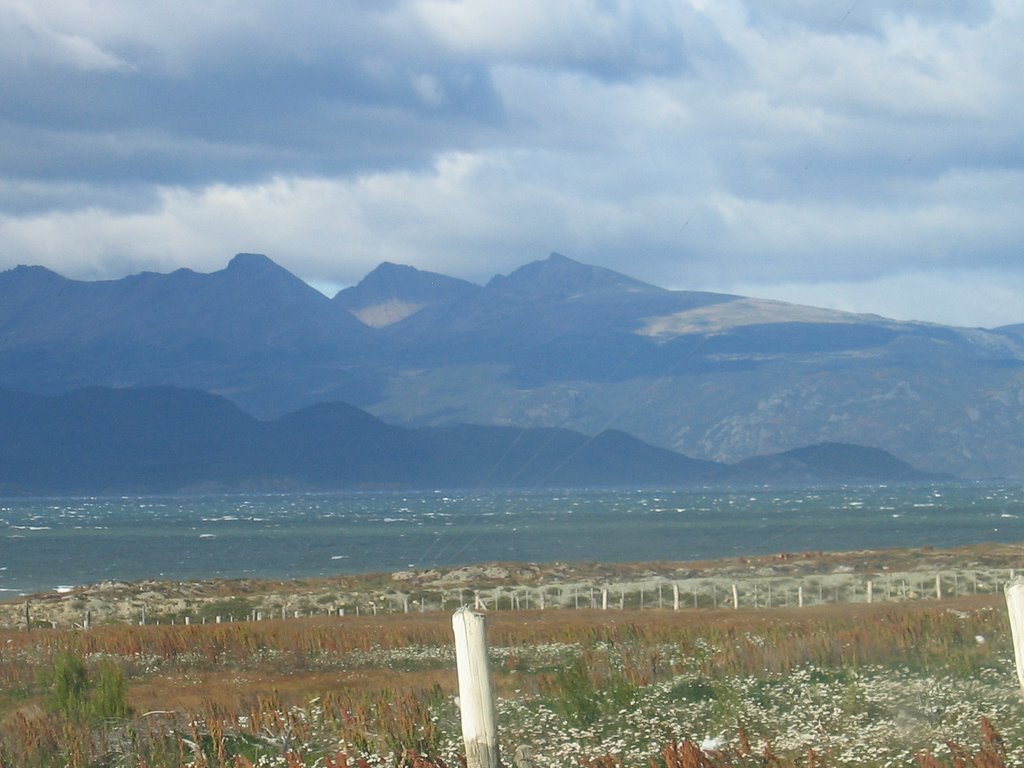
Soon our lungs and nostrils were choked with dust as we rambled along the unpaved path that leads up to the national park. Tierra del Fuego - the land of fire - was thus named by Magellan when he first gazed upon the land blazing with fires lit by native Indians. The bus stopped at the park entrance where foreigners get to pay more than the locals. Very unlike American national parks, there are no visitor centers, marked trail heads, or souvenir shops even. This is as rustic and natural as it gets. We opted to get off at Lago Roca and hike up to Bahia (bay) Lapataia, which officially marks the southernmost tip of Argentina.

Unmarked trails are filled with adventure. Of course we started off in the wrong direction but our first wrong turn brought us upon stunning views of Lake Roca. Emerald waters stretched towards cliff in the distance.The most notable aspect of our trek was the green carpet walk throughout. Lush green grass padded our steps throughout the trail. Enroute we came across multi-colored lagoons (green and black), lush valleys, soaring peaks, marine birds, and millions of rabbits..

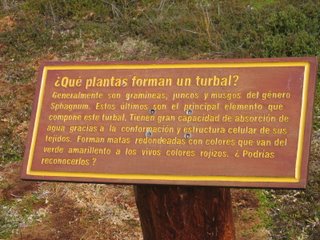
Here´s one for you botany buffs, what is a Peat Bog (Turbal in spanish)? The black waters that characterize a peat bog are caused by plants that survive in waters filled with dead plants. Lack of oxygen and presence of special chemicals prevent the dead plants from rotting. The surviving plants have special acquatic qualities that allow them to thrive on the dead plants. The effect is a surreal body of black water. Well that´s the end of today´s botany lesson. We´ll talk about Ecotones in our next blog¨:-)

After a two hour hike we reached our destination - more than 17,000 km from Alaska - the end of the last national highway in Argentina. The views from Lapataia Bay were splendid. We stopped awhile to picnic and ponder about our long journey.

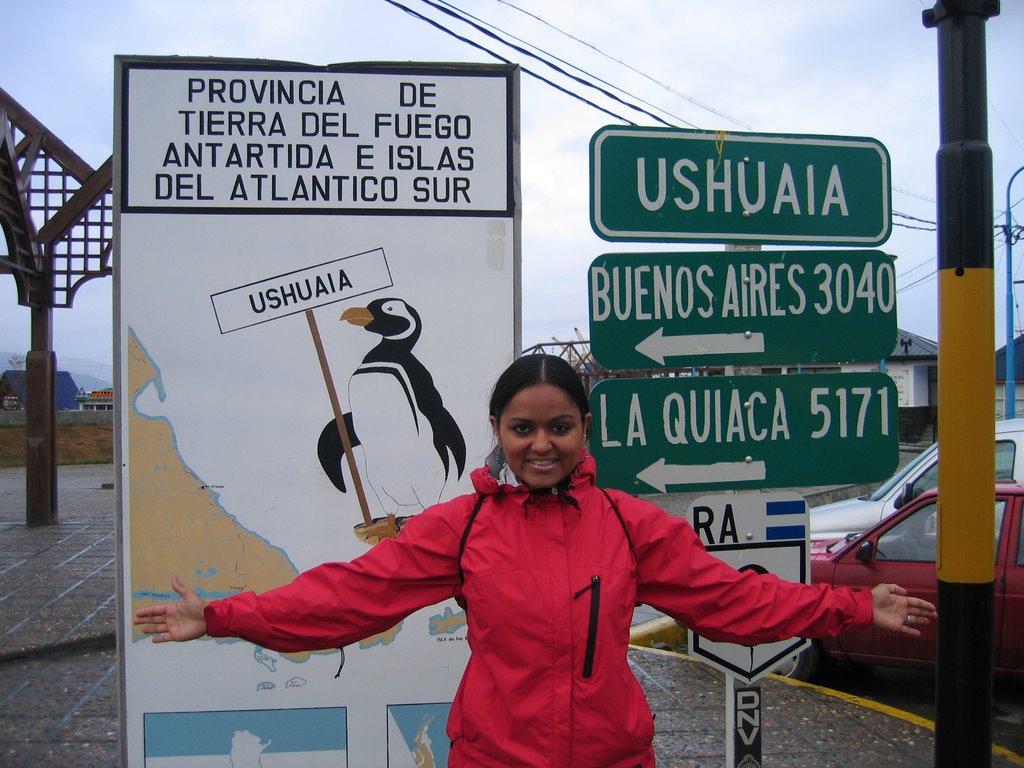
Ushuaia, Tierra Del Fuego, Argentina


Did we claim that buses were going to be our travel lifeline in Patagonia? Well never mind all that after that 12 hour bus ride from Punta Arenas through hours of barren nothingness. Not like we were really expecting much at this end of the world but let´s just say it wasn´t too exciting. The highlight of our journey was the checkpoint at the Chilean border before we crossed over into Argentina. The immigration officers got a real kick out of our Indian passports. The guy at the counter showed off our passports to all his colleagues and excitedly claimed that we were from India. Does that make us pioneers... first desis to ever cross the austral border into Tierra del Fuego? That made up for the rest of the butt-numbing, bumpy ride into Ushuaia. Not to mention the wind that was threatening to blow us away every time we took a pit stop.

¨Relax, you´re at the end of the world¨ proclaimed the punch line of our restaurant. Exactly what we were doing on this rainy evening at this southernmost port off the Beagle channels. Especially now that we had a great place to stay. After getting off the bus, we trekked around town and knocked at a few family-owned b&bs to find them all full. For all its remoteness, this was proving to be a mighty popular town! Big mamma at one of the b&bs directed us to the tourist information center for help finding an accommodation.

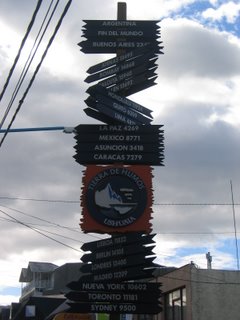
What´s that long line at the tourist info place all about? Oh, it´s those tourists wanting to get their passports stamped with ´congratulations you´ve reached the end of the world´ and receive a certificate of achievement. There were two suckers heading up that line - Nagesh and Kavita - of course. Umm, we´re here to find a place to stay, remember? Well, first things first.

Argentinians are just the most friendliest and helpful souls ever. The lady at the tourist info office called around a bunch of places in our budget till she found us a b&b. Our home here is an obnoxiously green structure with the most gorgeous views from our shocking blue bedroom. Our hosts, the Nahuels, have been more than gracious. The señora can´t stop chattering during breakfast to update us on all the current events.

Tierra del Fuego national park is on our itinerary for the day. Tomorrow we sail the Beagle channel to see a Penguin colony and visit an Argentinian Estancia (ranch). More on those trips later. Need to grab dinner now. Oh, by the way, the food here is seriously inexpensive - and delicious, even for Kavita.

For those who´re holding their breath on what´s going on with Torres del Paine, we´re still on our way but not until next week. In the meanwhile comes a detour to Los Glaciares national park near El Calafate, Argentina.

We gotta tell you one last bathroom detail before we say hasta mañana. Guess what? all the used TP needs to be trashed OUTSIDE the potty. The drainage system cannot handle flushing it down. We could make a killing out of marketing diaper genies as Toilet Paper genies in this part of the world. Any VCs out there dying to fund our brilliant ¨drainwave¨?

Wednesday, February 23, 2005

Are we there yet?


A trip to the end of the world takes just as long to get there as it sounds. Trust us when we say the world is not a small place. Five flights, two continents, three countries, and 36 hours later we´re still barely there. The flights were mostly uneventful but immigration had its share of surprises. Thanks to that distracted apple-munching lady at the Peruvian consulate, we arrived in Lima with a ¨business¨ visa. Now given the nature of our ¨business¨, it was no small task to prove our far-from-capitalistic intentions. Finally after running around in circles trying to plead innocence in our non-spanish, we signed some obscure form and wriggled our way out of Peru. Let´s not even worry about how to leave Peru next time just yet.

But wait, we didn´t really leave Peru that quickly. The last thing we needed after a seven hour sleepless layover followed by immigration drama was a two hour flight delay to Santiago. Brownie points to LAN Chile for serving sandwiches and bebidas (drinks) at the gate.

Touch down in Santiago was breathtaking. Nestled between the Andean mountain range was the sprawling expanse of the Chilean capital. It was a gorgeous summer afternoon - bright and 84F. Can we stay?

Now comes the famous ¨riding a bicycle in an elevator¨ flight to Punta Arenas. Chilean Patagonia is notorious for its gusty winds. While Nagesh was relieved that we were not riding a propellor plane, Kavita tried to abate her nervousness by focussing on winning rummy games. Apart from a few heart-lurching plunges, we made a smooth landing at 11pm on Feb. 22.
Are we there yet? Not at the end of the world. Not until we make it to Ushuaia, Argentina.

Although the airport at Punta Arenas was small, there were ample transfer options into the city. We chose to share a minivan that dropped us outside Hostal al fin del Mundo (hostel at the end of the chilean world). We were greeted by our very pleasant, bilingual host - Rodrigio. After a hot shower and change of clothes, we were energized enough to plan the rest of our Patagonian journey into Torres Del Paine national park.

We were in for a rude shock when Rodrigio unceremoniously told us that the park was indefinitely closed. A fire, accidentally started by a Czezh camper´s stove, had ravaged 14000 acres of the park. No one knew when it would open next. Rodrigio casually mentioned that it could take 2o days or more. We gawked at each other in utter disbelief. This was not really happening to us. Silence ripped through the room as all our planning, paranthas, and flights flashed by like a tragic movie.

Ah the joys of travelling. All we could do was to pick up the guidebook and start planning from scratch. Oh well, tomorrow is another day.